Home / Blog / CO2 (MAG) welding: a fast process for structures, gates and fences
CO2 (MAG) welding: a fast process for structures, gates and fences
CO2 welding is the most common process for steel structures. It is fast, economical and copes well with thicker material. Where a fine weld is needed, TIG is chosen.
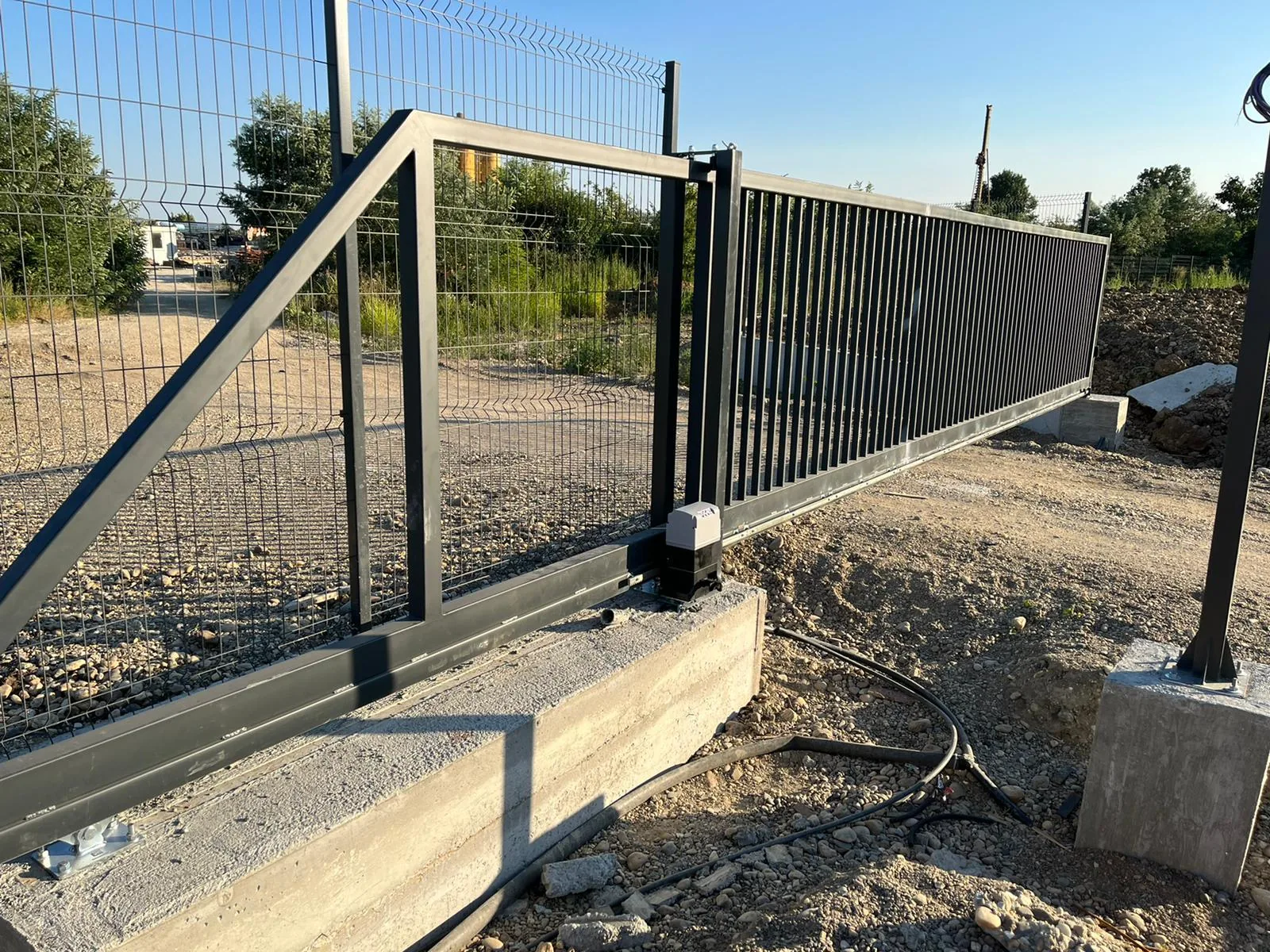
What CO2 welding is
When people say CO2 welding they usually mean MAG welding (Metal Active Gas). A wire, which is both the electrode and the filler, is fed automatically from a spool through a torch, and the electric arc melts it and joins the parts. The weld is shielded by gas from the same torch: pure carbon dioxide or a mixture of argon and CO2. The mixture gives a calmer arc and less spatter, while pure CO2 is cheaper and penetrates deeper.
Where it is used
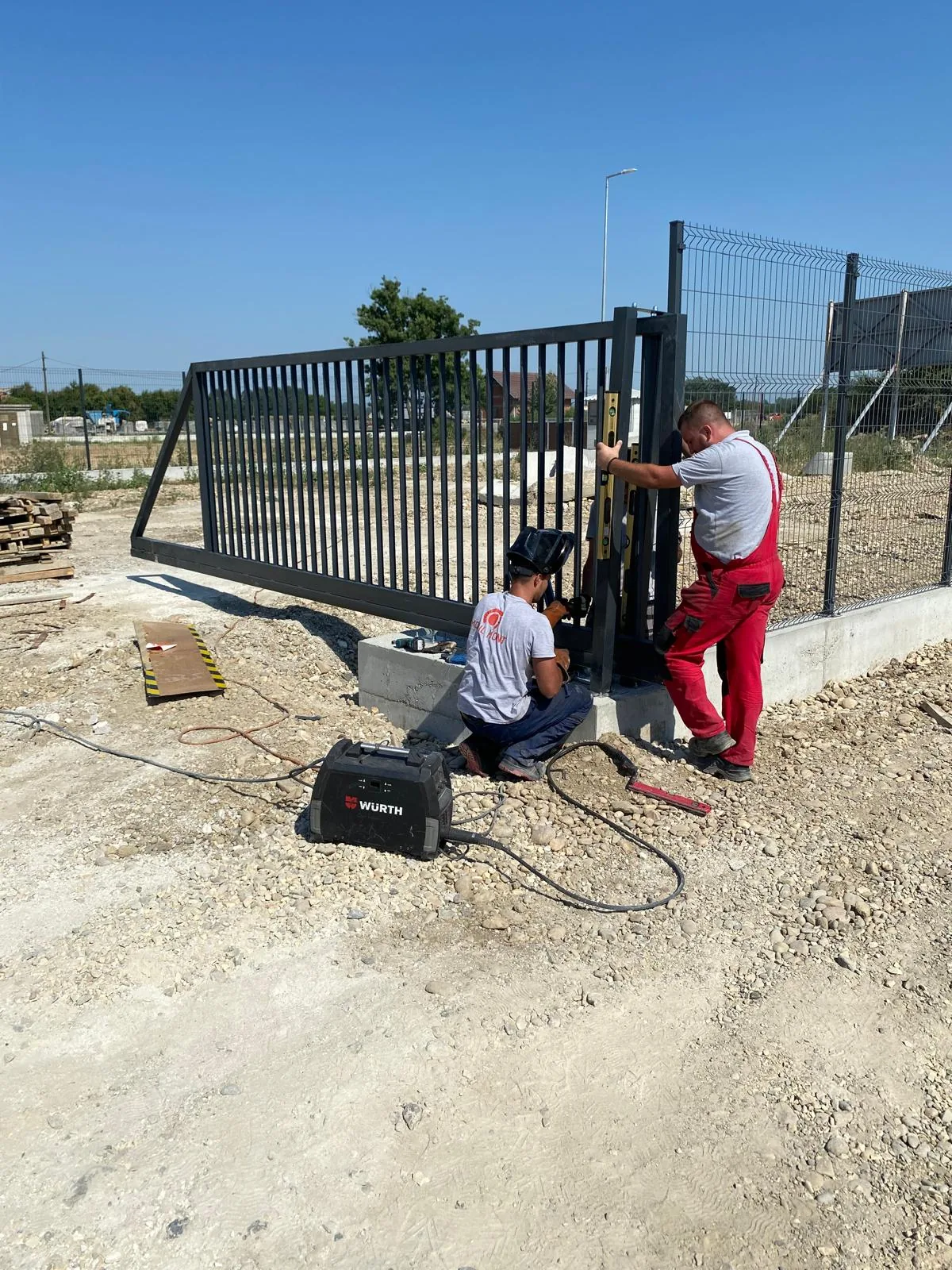
Because of its speed and good penetration, CO2 welding is the standard for load-bearing and semi-load-bearing structures in ordinary steel: gates, fences, canopies, staircases, halls and industrial doors. The wire is fed automatically, so welds are run faster than with TIG or stick welding.
Advantages
- High working speed and economy on longer welds
- Good penetration and strong welds in thicker steel
- Suitable for the workshop and for work on site, with protection from wind
Limits
- Metal spatter, which must be cleaned and ground off afterwards
- The weld is coarser than with TIG, so TIG is more often chosen for visible joints
- Wind blows the shielding gas away, so the work area must be sheltered outdoors
What makes a good weld
Quality does not depend on the machine alone. The joint must be free of rust, paint and grease, and the parts correctly fitted and tack-welded. The welding sequence is chosen so that heat does not distort the structure, because long fences and frames deform easily. Current, voltage, wire speed and gas flow are set according to the thickness of the material.
CO2 and TIG: a short comparison
| CO2 (MAG) | TIG | |
|---|---|---|
| Speed | High | Lower |
| Weld appearance | Coarser, needs grinding | Smooth and fine |
| Material | Ordinary steel, thicker sheet and profiles | Stainless steel, thin sheet, fine metals |
| Typical use | Gates, fences, structures, halls | Furniture, frames, visible joints |
| Cost of the weld | Lower on long welds | Higher |
After welding
The weld is cleaned of spatter and slag, ground where needed, and the surface is then prepared for corrosion protection. You can read more in the article on protecting metal after fabrication.
More from the blog
TIG welding: when to choose it and why it suits stainless steel
What TIG welding is, how it differs from CO2 (MAG) welding, and why it is the right choice for stainless steel, thin sheet and visible joints on furniture.
Read moreProtecting metal after fabrication: paint, galvanizing and more
How steel, stainless steel and brass are protected after fabrication: surface preparation, powder coating, galvanizing, passivation and care in transport.
Read moreSliding or swing gate: how to choose the right one for your entrance
Sliding or swing gate? A comparison by space, terrain, automation and upkeep, with the questions to answer before ordering a gate.
Read moreHave a project or just an idea?
Send dimensions and photos and we will come back with a proposal and a quote.