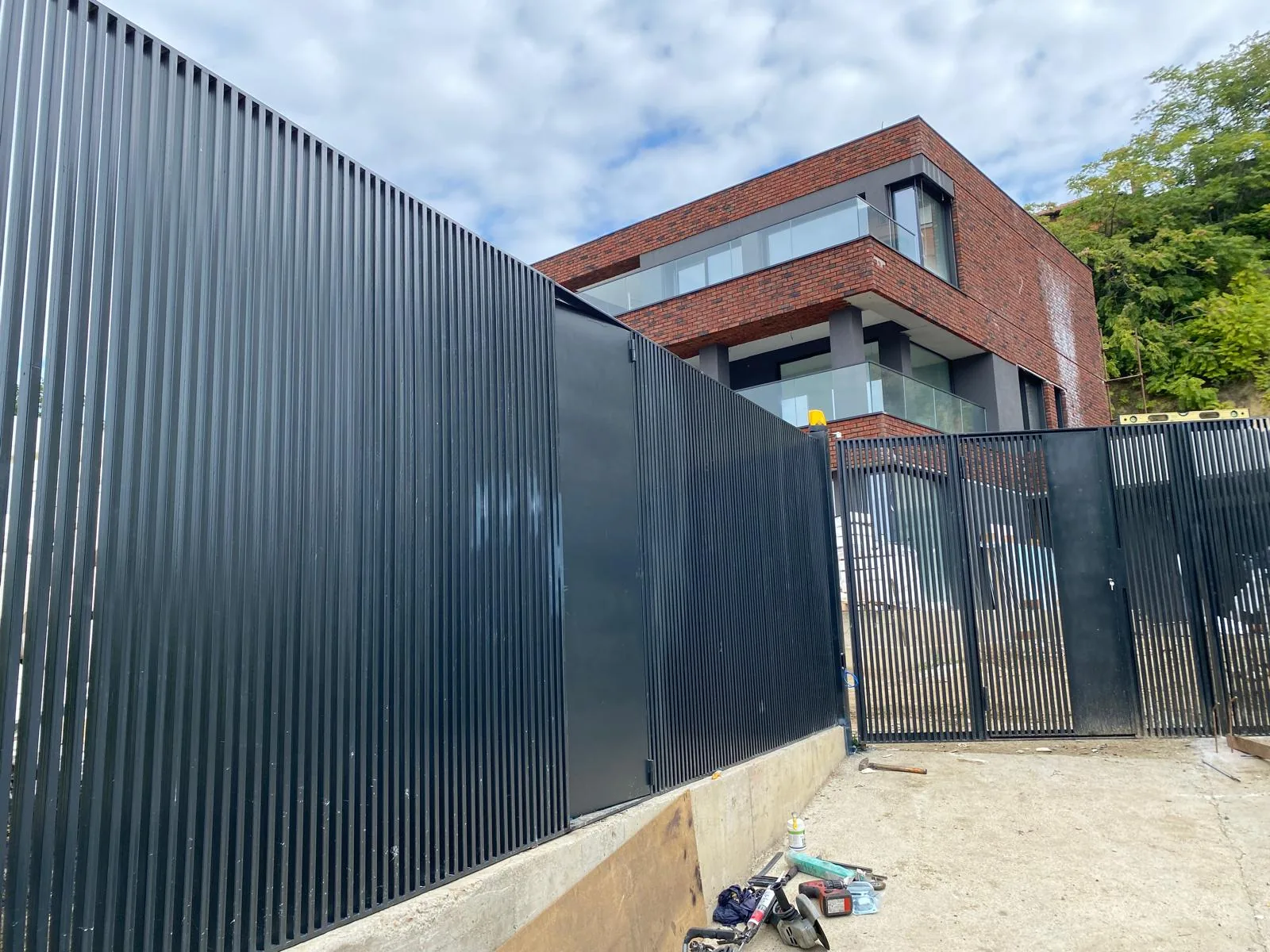
Why steel needs protection
Ordinary carbon steel rusts as soon as it meets moisture and oxygen. The most vulnerable places are the ones that went through the most during fabrication: welded joints, cut edges and areas where the factory coating has been removed. That is why protection is planned together with fabrication, not after it.
Surface preparation decides everything
Neither the most expensive paint nor zinc will hold on a poor base. Before protection, rust, weld scale, oil and dust are removed, and weld spatter is ground off. The surface is then blasted or ground and degreased. The protective layer is applied as soon as possible after preparation, before the surface starts to oxidise again.
The most common methods
- Painting: an anti-corrosion primer and a top coat. It is quick, easy to repair and suits interiors and parts that are not heavily exposed.
- Powder coating: the powder is applied electrostatically and baked in an oven. It gives a hard, even layer and a wide choice of colours. The limit is oven size, so large structures are done in sections.
- Hot-dip galvanizing: the piece is dipped in molten zinc. It gives long-lasting protection outdoors, including inside the profiles. Closed profiles need openings for air and zinc to drain, which is planned in the design. A galvanized piece can also be painted afterwards.
- Galvanized sheet and electro-galvanizing: a thinner zinc layer, suited to small parts and indoor use.
Stainless steel, brass and other fine metals
Stainless steel is not painted, but after welding it is cleaned and passivated so that it regains its corrosion resistance. It is kept from touching ordinary steel, because iron particles leave rust marks. Brass and similar fine metals darken over time, so they are protected with a clear lacquer or coating where needed and kept free of fingerprints.
These materials are also protected while they are being machined and made. Protective films stay on the surfaces for as long as possible, and pieces are handled so that they do not get scratched. A scratch on polished stainless steel or brass is hard to remove, so it is cheaper to prevent than to repair.
Transport and installation
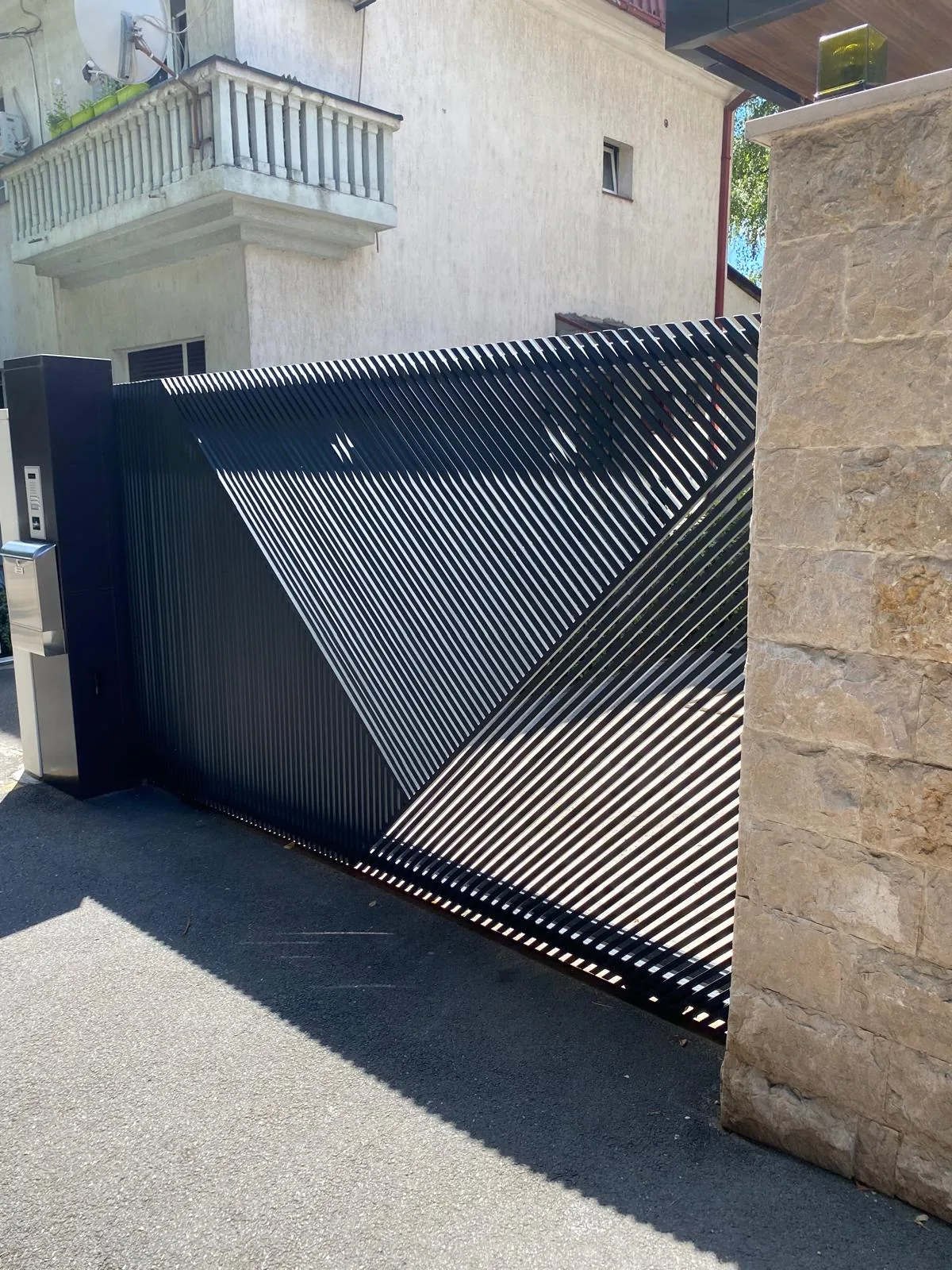
Damage most often happens on the way to the site and during installation. Finished pieces are therefore packed and supported so that they do not rub against each other. Places that are welded or cut on site, for example when fitting a gate, must be protected again and touched up with paint or a protective coating.
Maintenance
Protection lasts longer when it is maintained. Wash a fence and gate once or twice a year with water and a mild cleaner, and touch up small paint damage straight away, before rust starts to spread under the coating. Stainless steel only needs regular wiping, avoiding cleaners that contain chlorine.
Related services
More from the blog
TIG welding: when to choose it and why it suits stainless steel
What TIG welding is, how it differs from CO2 (MAG) welding, and why it is the right choice for stainless steel, thin sheet and visible joints on furniture.
Read moreCO2 (MAG) welding: a fast process for structures, gates and fences
What CO2 (MAG) welding is, where it is used on structures, gates and fences, its advantages and limits, and how it differs from the TIG process.
Read moreSliding or swing gate: how to choose the right one for your entrance
Sliding or swing gate? A comparison by space, terrain, automation and upkeep, with the questions to answer before ordering a gate.
Read moreHave a project or just an idea?
Send dimensions and photos and we will come back with a proposal and a quote.